AI Gold Rush Hits a Wall: Tech Stocks Plunge as Investors Question the Future of the AI Boom
November 6, 2026
The AI stock market crash has sent shockwaves through global financial markets, as technology shares tumble amid growing concerns over excessive artificial intelligence spending, uncertain corporate returns and weakening investor confidence. What was once considered the world’s most promising investment opportunity is now facing an extraordinary reality check, raising serious questions about the sustainability of the AI boom and the future of major technology companies.
What had long been a story of optimism suddenly became a story of uncertainty.
Wall Street witnessed a reversal as investors rushed to reduce exposure to technology and semiconductor companies. The Nasdaq Composite plunged 5.5% while the S&P 500 dropped 4.4% and the Dow Jones Industrial Average fell 3.4%. The Philadelphia Semiconductor Index suffered a sharper decline of approximately 12.2% marking one of its most painful trading sessions in recent years.
The scale of the losses highlighted how vulnerable the market has become to shifting expectations surrounding artificial intelligence.

TABLE OF CONTENTS
-
The AI Gold Rush Loses Its Momentum
-
Why Technology Stocks Are Falling
-
Semiconductor Giants Face Heavy Selling Pressure
-
Political Uncertainty Adds to Market Fears
-
The Growing Question of AI Investment Returns
-
Global Markets Feel the Impact
-
Is the AI Boom Turning Into a Bubble?
-
What Happens Next for Technology Stocks?
The AI trade loses its momentum
For much of the two years artificial intelligence has been the defining force behind technology investment. The explosive demand for processors, cloud computing infrastructure, data centres and AI-powered software propelled companies across the technology sector to extraordinary valuations.
Investors poured billions of dollars into businesses expected to dominate the technological revolution. Semiconductor manufacturers, cloud providers and infrastructure developers became figures in the global stock market rally.
Enthusiasm is increasingly being replaced by difficult questions.
Are technology companies spending much on AI infrastructure? Will the enormous investments generate revenue?. How long will investors continue rewarding companies for promising an AI-powered future without demanding stronger evidence of profitability?
These questions are now reshaping market sentiment.
The latest sell-off reflects a growing belief that the financial rewards of intelligence may take longer to materialise than investors originally anticipated.
Semiconductor giants come under pressure
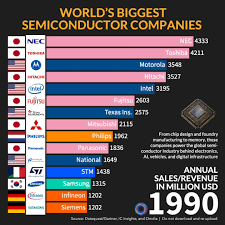
The semiconductor industry found itself at the centre of the market turmoil.
Shares of technology companies, including Advanced Micro Devices, Micron, Dell and Marvell Technology suffered substantial declines. Nvidia, one of the influential symbols of the AI investment boom also came under significant selling pressure.
Qualcomm added to the sectors difficulties after reporting than-expected smartphone chip sales reinforcing concerns about the broader semiconductor industrys growth outlook.
The pressure extended beyond companies. Investors increasingly appear concerned that the enormous expansion of AI infrastructure may encounter operational and political obstacles.
For an industry built around expectations of unlimited demand, even a modest reassessment of future growth can have dramatic consequences.
Politics creates another obstacle for the AI revolution
Adding to the uncertainty is the changing environment in the United States.
Recent midterm election results have raised concerns about scrutiny of AI infrastructure development, particularly the construction of energy-intensive data centres.
Several local ballot initiatives have focused on restrictions surrounding data-centre expansion reflecting growing concerns about electricity consumption, water resources, environmental pressures and the impact of large technology facilities on local communities.
This presents a significant challenge for companies investing heavily in AI infrastructure.
Artificial intelligence requires computing capacity and that capacity depends on physical facilities, advanced chips, reliable electricity and substantial financial resources.
If regulatory restrictions delay construction or increase operating costs the economics of the AI expansion could become more complicated.
The concern is not necessarily that artificial intelligence will stop advancing. Rather the infrastructure supporting its expansion may face greater resistance than investors previously expected.
A trillion-dollar question: When will AI spending pay off?
Perhaps the biggest issue confronting technology investors is the widening gap between investment and measurable financial returns.
Major technology companies have committed resources to developing AI models expanding cloud infrastructure and building next-generation computing facilities.
However infrastructure investment alone does not guarantee profits.
Investors increasingly want evidence that AI products can generate recurring revenue improve business productivity and deliver returns that justify the extraordinary capital expenditure.
The challenge is particularly significant for infrastructure companies, which may face higher borrowing costs and more difficult access to financing.
For these businesses the combination of expansion plans and uncertain demand could create serious financial pressure.
The market is therefore beginning to distinguish between companies that are successfully monetising intelligence and those whose valuations depend largely on expectations of future growth.
Asia feels the shockwaves
The consequences of Wall Streets technology sell-off were quickly felt across markets.
On Friday Asian technology-heavy markets came under pressure. South Koreas Kospi fell sharply enough to trigger a trading circuit breaker while Japans Nikkei and Taiwans equity market also recorded substantial declines.
The reaction demonstrated how interconnected global financial markets have become with the artificial intelligence investment cycle.
Asian economies play a role in the global semiconductor supply chain making their stock markets particularly sensitive to changes in expectations surrounding chip demand, technology investment and data-centre expansion.
A prolonged downturn in AI-related investment could therefore have consequences extending beyond Silicon Valley and Wall Street.
Is the AI boom ending. Is the market simply resetting?
Despite the severity of the sell-off declaring the end of the artificial intelligence revolution would be premature.
AI continues to represent a technological transformation with potential applications across healthcare, finance, manufacturing, education, transportation and countless other industries.
The technology itself has not suddenly lost its capabilities. What is changing is the markets willingness to assign valuations to companies based on future possibilities.
This distinction is critical.
The current downturn may represent a correction after an extended period of aggressive investment and elevated expectations. It could also expose weaknesses in business models that depend on capital spending and continuously rising demand.
Ultimately the companies likely to emerge stronger will be those capable of converting technological innovation into sustainable earnings.
The chapter of the technology market
The latest market turmoil marks an important turning point for the global technology industry.
For years investors were willing to pay a premium for the promise of intelligence. Now they are demanding something tangible: profitability, financial discipline and evidence that massive investments can produce lasting economic value.
The coming months could prove decisive as technology companies report results revise investment plans and demonstrate whether their AI strategies can deliver meaningful returns.
The artificial intelligence revolution may still have potential but its financial success is no longer being taken for granted.