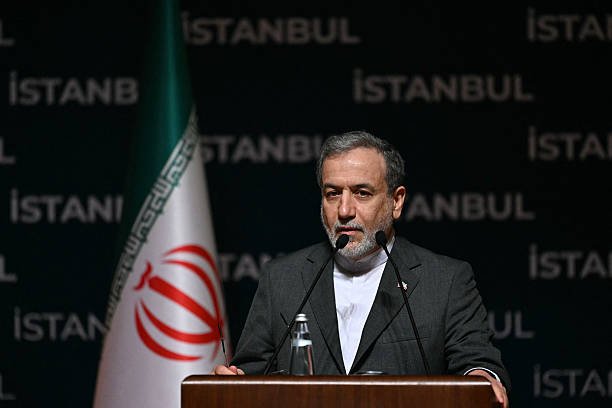
A central figure in this escalation is Iranian Foreign Minister Seyed Abbas Araghchi, whose recent rhetoric has shifted from traditional diplomacy to what analysts call “digital-era brinkmanship.”
In a series of blistering statements shared via official channels and social media, Araghchi framed the tech sector as an extension of the battlefield. He argued that the strike on the pharmaceutical plant was not just an Israeli operation, but a “joint venture” powered by American algorithms and real-time data.
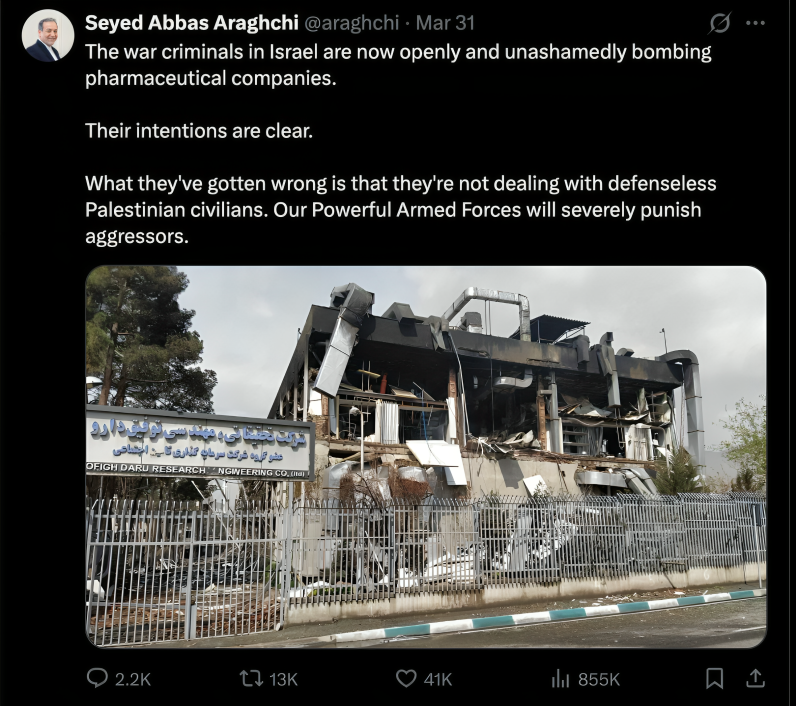
“The war criminals in Israel are now openly and unashamedly bombing pharmaceutical companies,” Araghchi posted, accompanied by images of the destruction. “What they’ve gotten wrong is that they’re not dealing with defenseless Palestinian civilians. Our Powerful Armed Forces will severely punish aggressors.”
The “Technological Complicity” Argument
Araghchi specifically called out the “major tech firms” by name, suggesting that their participation in military contracts makes them legitimate targets under Iran’s interpretation of international law. He characterized the relationship between Silicon Valley and the Israeli military as a “supply chain of terror,” asserting that:
-
Intelligence: U.S. firms provide the surveillance data used to track Iranian assets.
-
Precision: AI-driven targeting systems from American companies were used to pinpoint the pharmaceutical facility.
-
Infrastructure: Cloud networks allow for the seamless coordination of these strikes from thousands of miles away.
By labeling the leadership of these companies as “war criminals,” Araghchi has signaled that Tehran no longer views Big Tech as neutral commercial entities. His “ticking clock” metaphor suggests that Iran’s window for a “severe punishment” is closing, leaving global tech leaders wondering if their next quarterly report will be interrupted by a kinetic or digital counter-strike.