Fresh forecasts from two of the semiconductor industry’s most influential players, ASML and TSMC, are reinforcing confidence that the global boom in artificial intelligence (AI) spending remains firmly on track.
ASML, the world’s leading supplier of advanced chipmaking equipment, reported stronger-than-expected order bookings and maintained an optimistic outlook for the coming quarters. The company highlighted sustained demand for its extreme ultraviolet (EUV) lithography machines—critical tools used to manufacture the most advanced AI chips. Management pointed to continued investments by major chipmakers racing to expand capacity for AI-related workloads.
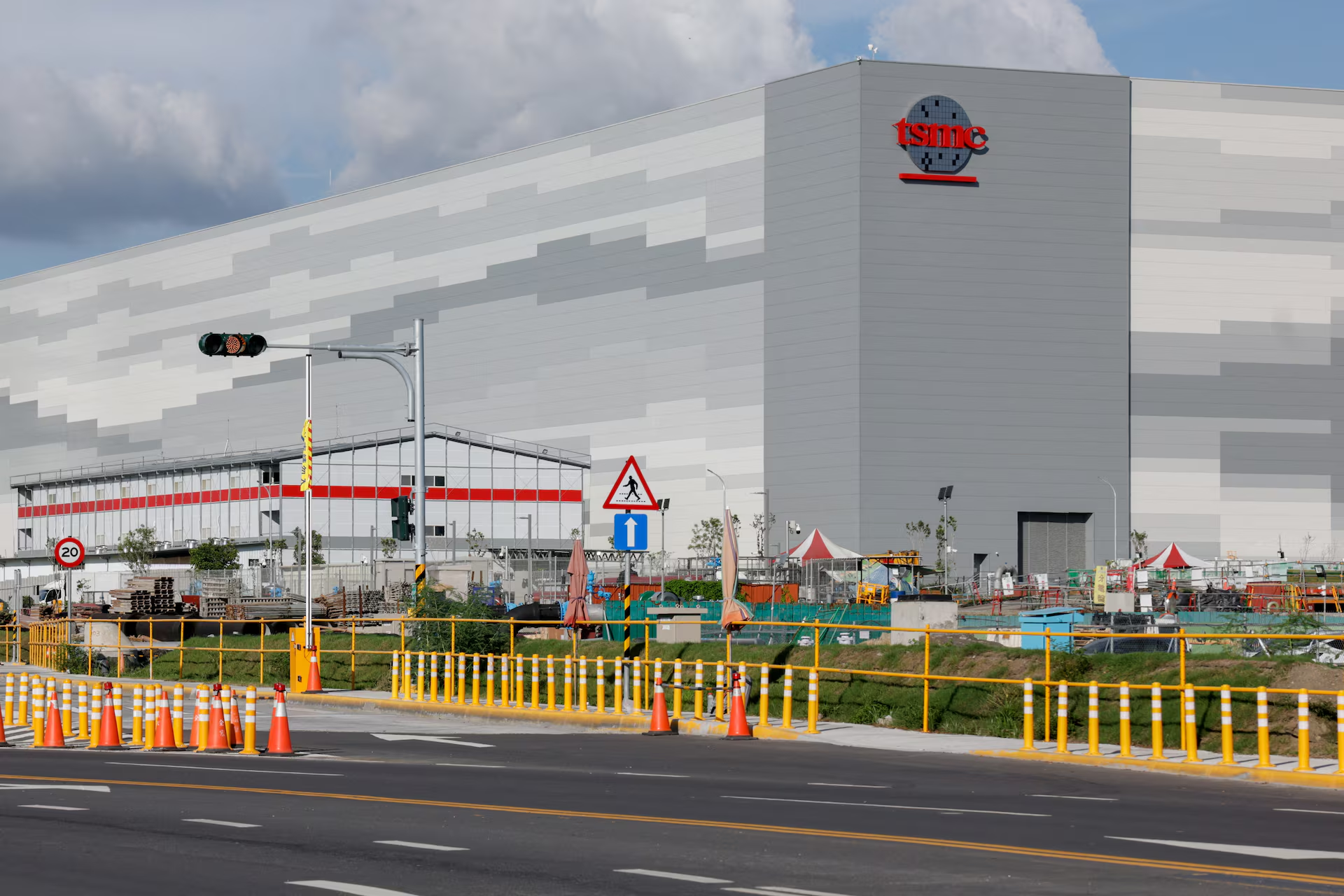
Meanwhile, TSMC, the largest contract chip manufacturer globally, echoed similar optimism. The company raised its revenue growth projections, citing surging demand for high-performance computing (HPC) chips, a category heavily driven by AI applications. TSMC executives noted that AI-related revenue is expected to grow at a significantly faster pace than the company’s overall business, becoming an increasingly dominant contributor in the next few years.
The combined signals from both companies suggest that fears of a near-term slowdown in AI infrastructure spending may be overstated. Instead, hyperscalers and tech giants appear to be doubling down on investments in data centers, advanced processors, and next-generation semiconductor technologies.
Industry analysts say the alignment between ASML’s equipment orders and TSMC’s production outlook provides a strong leading indicator for the broader chip sector. Since ASML sits upstream in the supply chain and TSMC operates at the manufacturing core, strength in both areas typically reflects durable, end-to-end demand.
The upbeat forecasts also come amid a broader shift in capital allocation across the tech industry. Companies are prioritizing AI capabilities—from training large language models to deploying inference at scale—driving unprecedented demand for cutting-edge chips and manufacturing capacity.
While macroeconomic uncertainties and geopolitical tensions remain potential risks, the latest guidance from ASML and TSMC indicates that AI is continuing to reshape the semiconductor landscape, with spending momentum showing little sign of slowing.