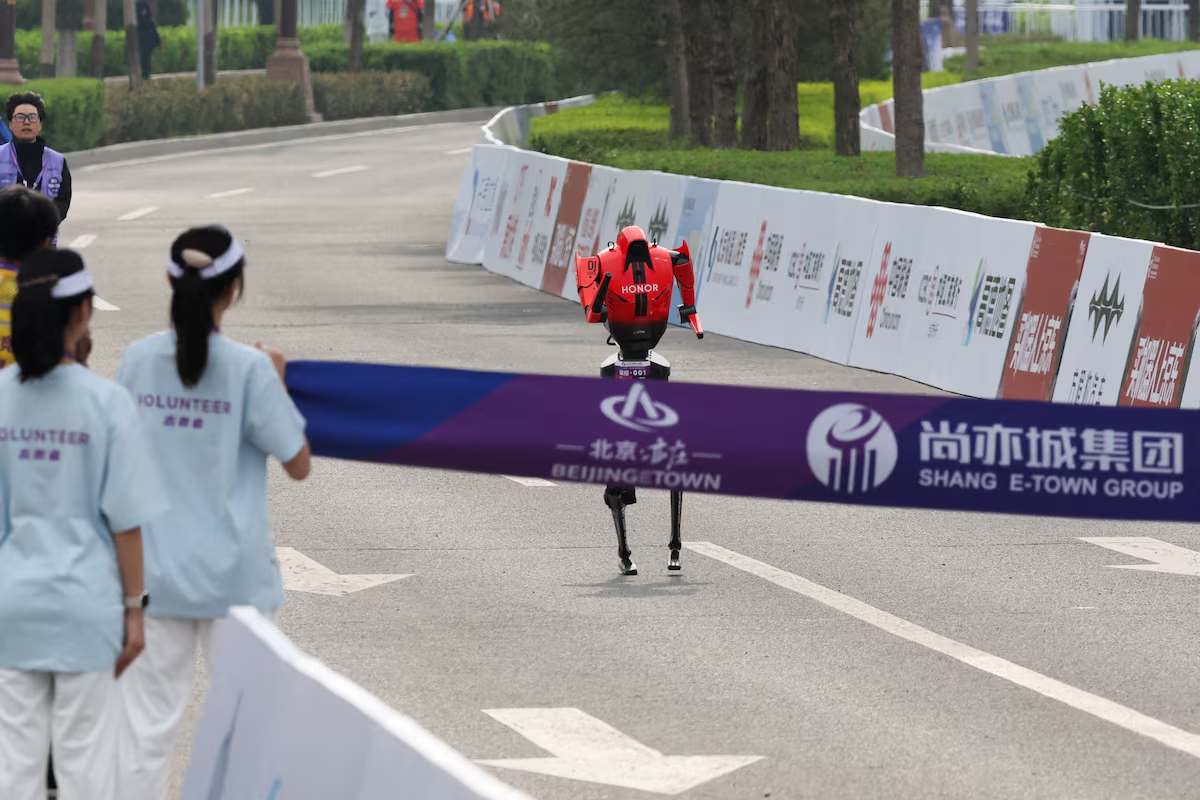
In a groundbreaking display of technological progress, humanoid robots have outperformed human runners in the 2026 Beijing half-marathon, signaling a dramatic leap forward in artificial intelligence and robotics.
The race, held on April 19 in Beijing’s high-tech Yizhuang district, featured more than 100 teams of humanoid robots competing alongside around 12,000 human participants on a 21-kilometer course. Unlike previous editions, where robots struggled to complete the race, this year’s machines demonstrated remarkable speed, stability, and autonomy.
The standout performer was an autonomous humanoid robot developed by Chinese tech company Honor, which completed the race in just 50 minutes and 26 seconds—a time that rivals and, in some cases, surpasses elite human performances under comparable conditions.
Even faster was another robot that crossed the finish line in 48 minutes and 19 seconds, though it was penalized for relying on remote control, as the competition prioritized fully autonomous systems.
From Struggles to Supremacy
The achievement marks a dramatic improvement from the 2025 event, where most robots failed to finish and the winning machine took nearly three hours to complete the course. In contrast, this year’s robots showcased advanced engineering, including human-like leg designs, improved balance systems, and even liquid-cooling technologies adapted from smartphones.
Approximately 40% of the robots operated fully autonomously, navigating curves, slopes, and narrow paths without human intervention—an important milestone in real-world AI mobility.
A Glimpse Into the Future
Spectators and experts alike were struck by the rapid pace of development. What was once a novelty has quickly become a serious demonstration of machine capability. The event also featured robots performing auxiliary roles, such as traffic control, hinting at broader urban applications.
However, experts caution that success in a controlled race environment does not yet translate into real-world versatility. Tasks requiring fine motor skills, complex decision-making, and adaptability remain significant challenges for humanoid robots.
China’s Strategic Push
The event underscores China’s growing ambition to lead in advanced robotics and artificial intelligence. Supported by national policy initiatives and increasing investment, the country is rapidly advancing toward integrating humanoid robots into industries such as manufacturing, services, and potentially emergency response.